
What does a wish do?
Think of someone you will see today. Perhaps a neighbor has a long journey ahead. You can wish them safety without knowing how their day will turn out. The practice is in the direction you give your attention each time you remember them.
The Mettā Sutta joins this wish to everyday conduct. It speaks of gentleness in speech and extends goodwill to living beings near and far, familiar and unseen. The quiet moment and the way you greet the next person belong together. Read the Mettā Sutta in Pāli and English, hosted by the Insight Meditation Society
Try one minute with one person in mind
- Choose someone easy to wish well. Picture them in an ordinary moment, such as setting out for work. A name is enough if an image does not come easily.
- Offer a short wish in your own words. For a neighbor leaving home you might think, “May your journey go peacefully.” Repeat it slowly enough to hear what you mean.
- Widen the wish. Include someone whose name you do not know, perhaps another passenger on the same bus. You can include yourself too. Close by thinking of one small kindness you could put into practice today.
These are suggested words for starting. Common Ground Meditation Center also gives examples for safety, peace and ease, using both the first and second person. If the words feel mechanical, shorten the phrase and bring the person back to mind. Common Ground’s chant book and mettā phrases
Using a shrine as a visual cue
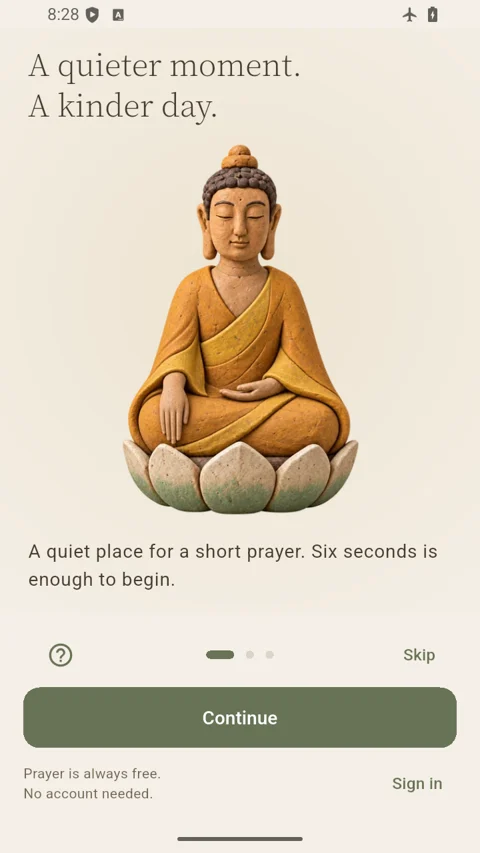
If you like a visual focus, settle in front of the Buddha image, then let your attention rest on the person you have chosen. The words can stay entirely your own. Open a Buddha courtyard on Android.