
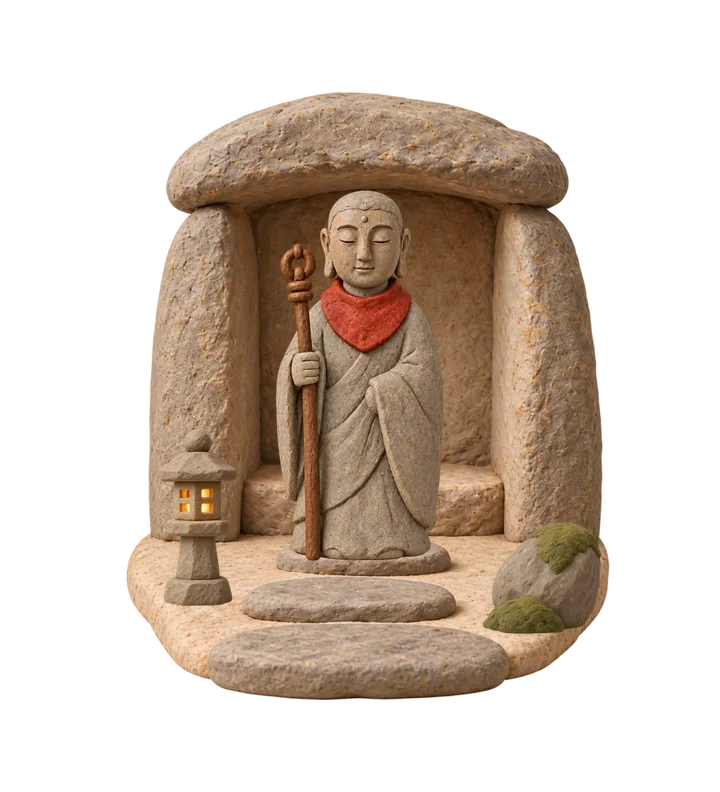
A red bib belongs to the life of the image after it was carved. It can be replaced or renewed by another visitor. Look at the difference between the enduring statue and the changeable cloth: together they show how a wayside figure can continue to receive care.
How a bodhisattva came to stand beside Japanese roads
地蔵菩薩 · Jizō Bosatsu, the bodhisattva Kṣitigarbha
Jizō’s Sanskrit name, Kṣitigarbha, is often translated as Earth Store. Devotion reached Japan by the eighth century and flourished during the Kamakura period. In Buddhist understandings of rebirth, beings can suffer in any of six realms. Jizō’s willingness to reach even those in the hell realms gave his compassion a scope much wider than the wayside statues many visitors first encounter.
A thirteenth-century sculpture at the Met portrays Jizō as a traveling monk. The rings of his staff evoke the six realms. The sound of the moving staff also signals his approach to small creatures underfoot. In one object, a large religious idea takes the recognizable form of a traveler’s careful step.
In Japan that readiness to meet people on their journeys helps illuminate Jizō’s connections with travelers, children and families who grieve. A bib tied around a statue or a household hosting an image for a few days belongs to the ongoing history of care around that particular Jizō. The clothing and location can tell a more recent story than the carved figure underneath.
Look closer
What is the three-day Jizō custom at Niu?
Jizōbon and the children who gather around Kyoto’s roadside statues