
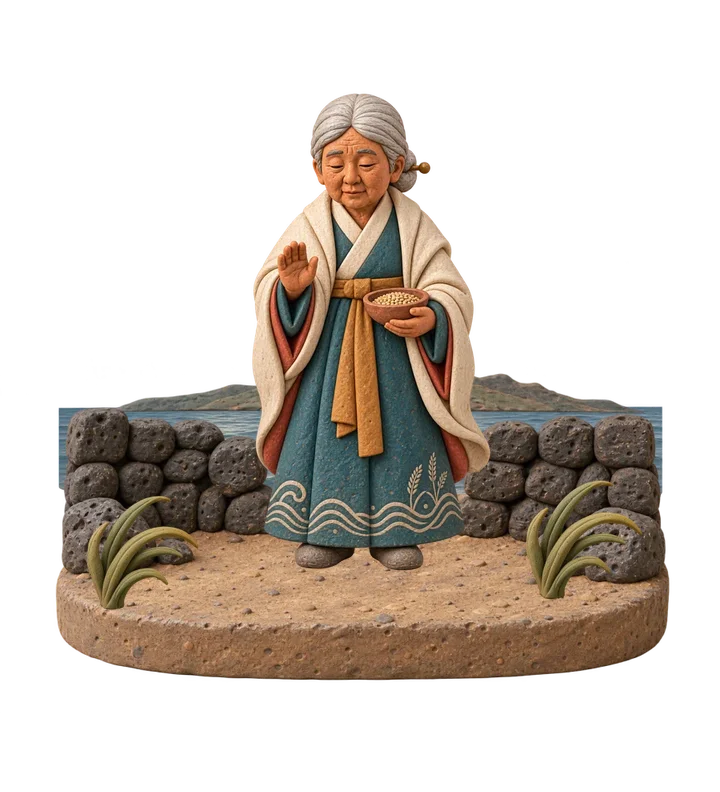
In the app, basalt, shore grass and the open water identify Jeju as the setting. The elder’s face and clothes are contemporary artistic choices. For the cultural account, follow the seasonal visit and the community that welcomes her rather than treating the miniature as a historical portrait.
A seasonal visitor in Jeju’s maritime history
영등할망 · Yeongdeung Halmang, Jeju’s wind grandmother
On Jeju, Halmang is a local term of address for a grandmother or elder woman. The wind grandmother’s story is organized around a visit during the second lunar month. An island calendar shaped by sailing, fishing and diving gave the welcome and farewell particular significance. Weather determined when a person could work and when a family could expect someone home.
At Chilmeoridang, the Yeongdeunggut includes rites for the visiting goddess alongside other deities associated with the sea and mountains. Ritual specialists lead the ceremonies, and members of fishing and diving communities participate. Naming the participants matters: the tradition survives through their knowledge of how to prepare offerings, perform the rites and recognize the right moment in the season.
UNESCO inscribed the Chilmeoridang tradition in 2009. The inscription documents a named community’s practice on Jeju. Other villages preserve their own accounts and arrangements. A coastal landscape or an elder in island dress can suggest a setting, but the essential historical relationship is between a seasonal visitor and the people who continue to receive her.
Look closer
- Jeju Tourism Organization · Grandma Yeongdeung and the coastline
- UNESCO · Jeju Chilmeoridang Yeongdeunggut