
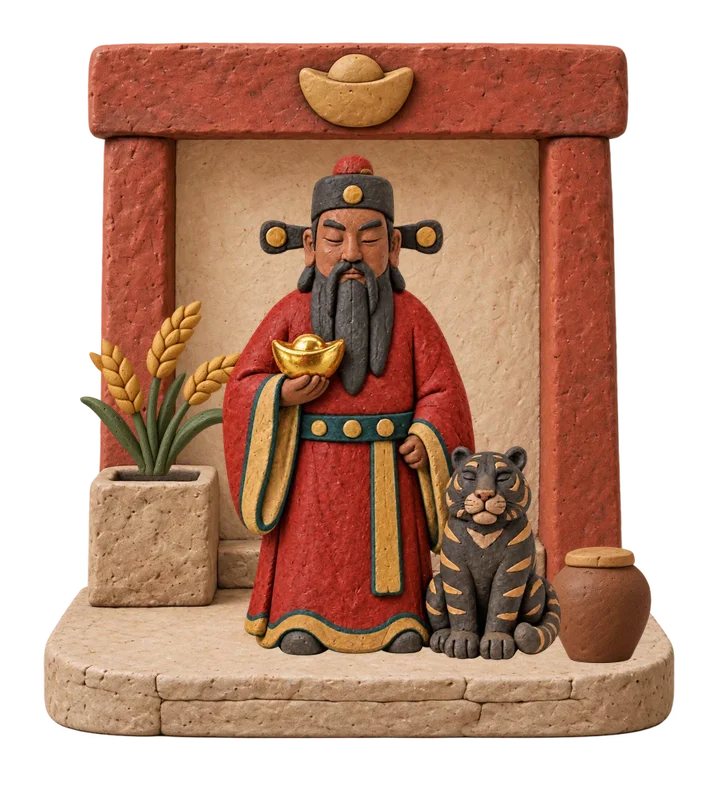
Look at the tiger and the ingot together in the British Museum example. The first conveys power and the second draws attention to wealth. Little Shrine places grain and a storage jar nearby, so abundance in the courtyard also has an everyday meaning: provisions set aside for later.
The marshal in the treasury
趙公明 · Zhào Gōngmíng, a martial Cáishén or wealth deity
Cáishén is a category of wealth deities. Calling a figure “the God of Wealth” can obscure the historical identity a particular community recognizes. Zhao Gongming is the martial marshal among those figures. His commanding presence and tiger distinguish him from images in which a civil official’s robes and a genial expression carry the message of prosperity.
A Chinese woodblock print in the University of Michigan collection places Marshal Zhao in the center. Printing allowed a composition of figures, attendants and emblems to be reproduced on paper. A devotee looking at such a print encountered an ordered company around the marshal. A single freestanding figurine draws attention instead to the individual and his identifying attributes.
Beigang Wude Temple’s own account identifies Zhao as its central wealth deity. Its treasury and birthday observances give that title social meaning: people return at particular times, prepare particular foods and recognize a shared calendar. The gold in a picture explains only one part of what the deity means in a temple community.
Look closer
- British Museum · Zhao Gongming riding a tiger and holding an ingot
- British Museum · China’s talismanic tigers
What do birthday offerings mean at Beigang Wude Temple?
Why devotees return to Beigang for the wealth god’s birthday