
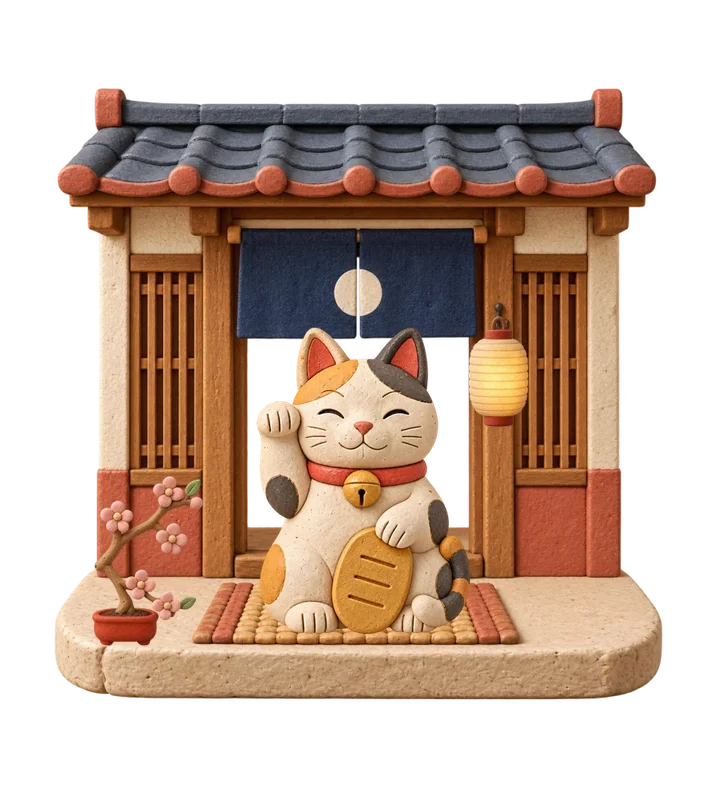
A pottery town looks at a familiar object
Seto’s ceramic cat industry grew around the turn of the twentieth century. A raised paw had to remain legible when shaped in clay, fired and displayed on a shelf. At the festival’s exhibition, a hundred selected artists reinterpret the cat. Looking from one work to another reveals how little a maker needs to keep for a viewer to recognize that gesture. Workshops give visitors a chance to make those choices themselves.
A festival cat and a temple dedication
At Tokyo’s Gōtokuji, someone may dedicate a small cat in gratitude for a fulfilled wish. In Seto, a visitor might encounter one as an exhibition entry, a piece of tableware or something made at a workshop. The two places preserve different parts of the figure’s history. A temple dedication records a relationship with the place that received it. The Seto festival also draws attention to the skill and livelihood of the maker.