
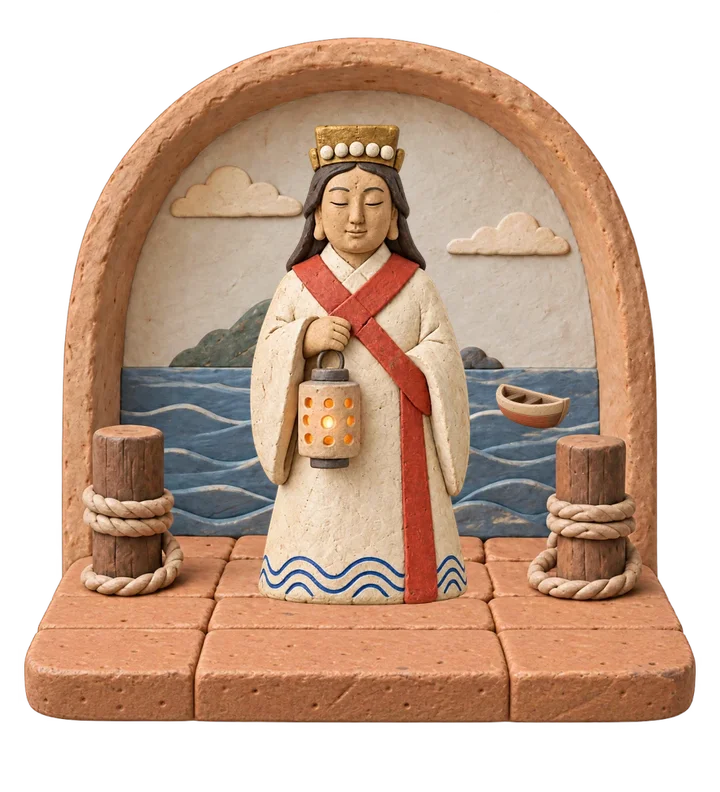
A boat is the detail to look for in Little Shrine’s harbor. It sits behind Mazu, where the line between land and water is visible. UNESCO’s account of Mazu belief and customs offers the wider context: communities sustain the tradition through gatherings, ceremonies and stories as well as images.
From Meizhou Island to pilgrimage routes
媽祖 · Māzǔ, also honored as Tiānhòu, Empress of Heaven
Devotees trace Mazu’s life to tenth-century Meizhou Island off the coast of Fujian. In the tradition recorded by UNESCO, she aided people at sea and died attempting a rescue. Treating this account as a community’s sacred biography lets us understand why rescue and protection are central to her identity while keeping the distinction between tradition and an independently documented life.
As coastal families, fishers and traders moved, they established places to honor Mazu in new ports. A temple across the water could maintain a relationship with an earlier temple through visits and processions. The result is a geography of devotion that makes sense along shipping routes and across the Taiwan Strait as well as within a single town.
In Taiwan the Dajia pilgrimage takes Mazu’s image through communities on land. Residents who accommodate pilgrims or prepare food participate in the event even when they do not travel the entire route. UNESCO inscribed Mazu belief and customs in 2009. The inscription recognizes a living tradition carried by communities, including the people who prepare for the procession and welcome it home.