
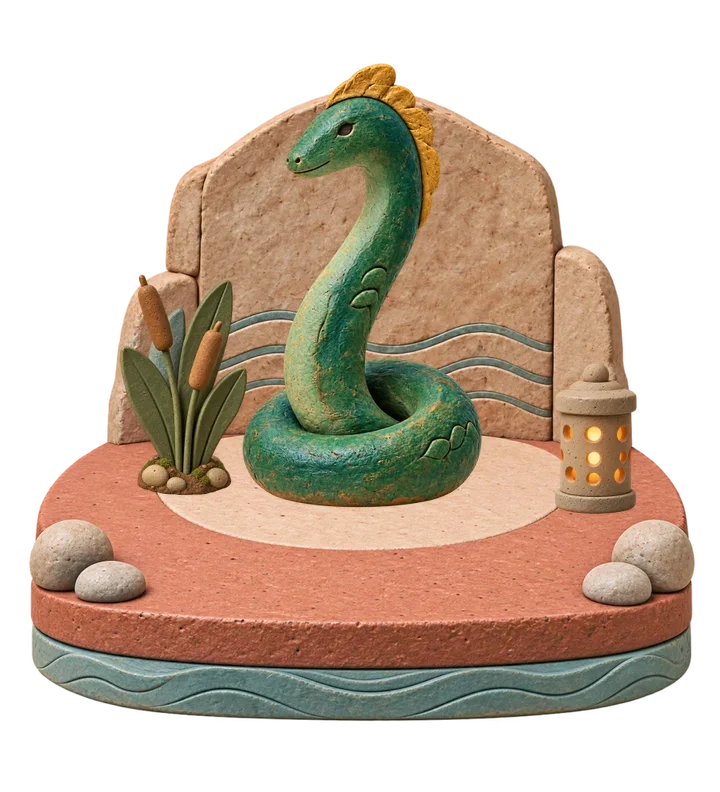
Read the silhouette from the coiled base upward. In the Little Shrine scene, the reeds mark the water’s edge while the coil rests on dry ground. That boundary gives the animal a setting you can read even before you recognize its name.
From sheltering the Buddha to guarding a river
พญานาค · Phaya Nak, a nāga lord
Nāga is a South Asian term for powerful serpent beings. Buddhist narratives, Khmer sculpture and Thai waterside traditions preserve different histories of these beings. A particularly identifiable narrative is that of Mucalinda, the serpent king who shelters the meditating Buddha during heavy rain. The coils become a seat and the spread hood becomes a canopy.
The Met’s twelfth-century Cambodian sculpture gives that story a monumental form. Images of the sheltered Buddha acquired special prominence in the Khmer realm under Jayavarman VII around the turn of the thirteenth century. The figure on the coils identifies the episode. A serpent on a Thai riverside without a seated Buddha needs to be read from its own surroundings.
Research in Mukdahan documents offerings and local interpretations at several Mekong sites. There the waterside setting connects a serpent image with the river, nearby communities and the particular site where people gather. The app follows this second visual arrangement. Its solitary coiled figure invites comparison with river guardians without assigning every local serpent the name Mucalinda.
Look closer
How do naga observances differ between Krabi and Mukdahan?
Why Nong Khai gathers by the Mekong at the end of Buddhist Lent